The short version
Cat6 supports 10 Gbps only over short distances, typically up to around 55 meters, and 1 Gbps to the full 100-meter channel. Cat6A supports 10 Gbps across the full 100 meters. Both handle 2.5 and 5 Gbps in most real installations, but Cat6A gives more margin.
Where Cat6A is worth it
- Wireless access points
- Modern access points use multi-gig uplinks and higher PoE power. Cat6A gives headroom for the next refresh.
- High-power PoE
- Bundles carrying high PoE loads generate heat. Cat6A’s construction handles that heat better over long bundles.
- Long-life buildings
- Labs, hospitals, campuses and owned headquarters where the cable plant will outlive several equipment cycles.
Where Cat6 is still fine
For standard desk drops in a leased office with a short horizon, Cat6 is usually adequate and cheaper. Many organizations choose a mix: Cat6A to access points, cameras and other high-power or high-bandwidth endpoints, Cat6 to desks.
The costs people forget
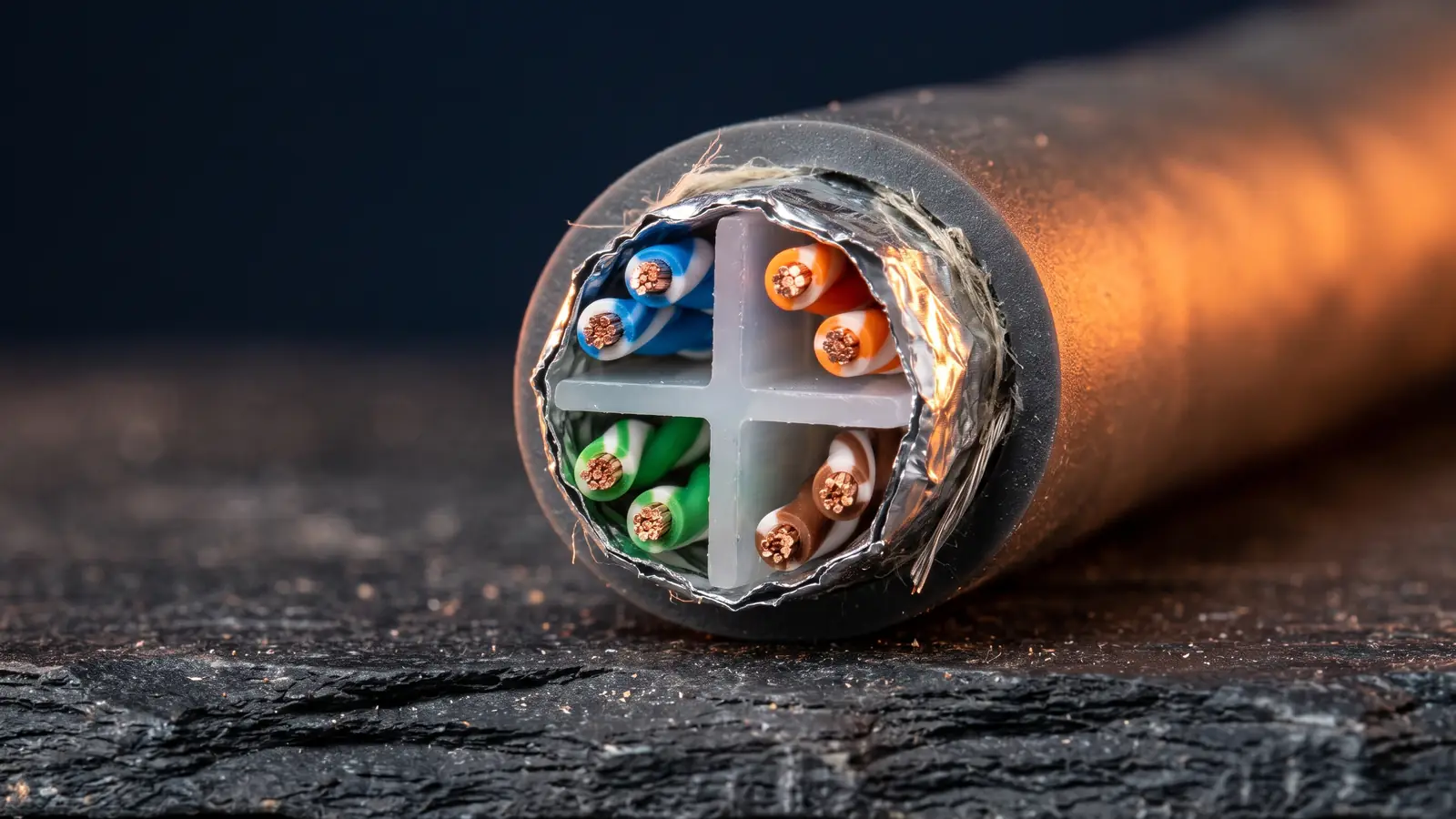
Cat6A cable is thicker and stiffer. It needs more space in pathways, larger bend radii and more careful termination. Factor in cable tray and conduit sizing, and patch panel density, before you compare price per foot.
Whichever category you choose, insist on certification testing of every link and labeled as-built drawings. An untested Cat6A installation can perform worse than a well-installed Cat6 one.
Related services
Want an engineer’s view of your own network? Free network assessment